Eunice Marks
Intro
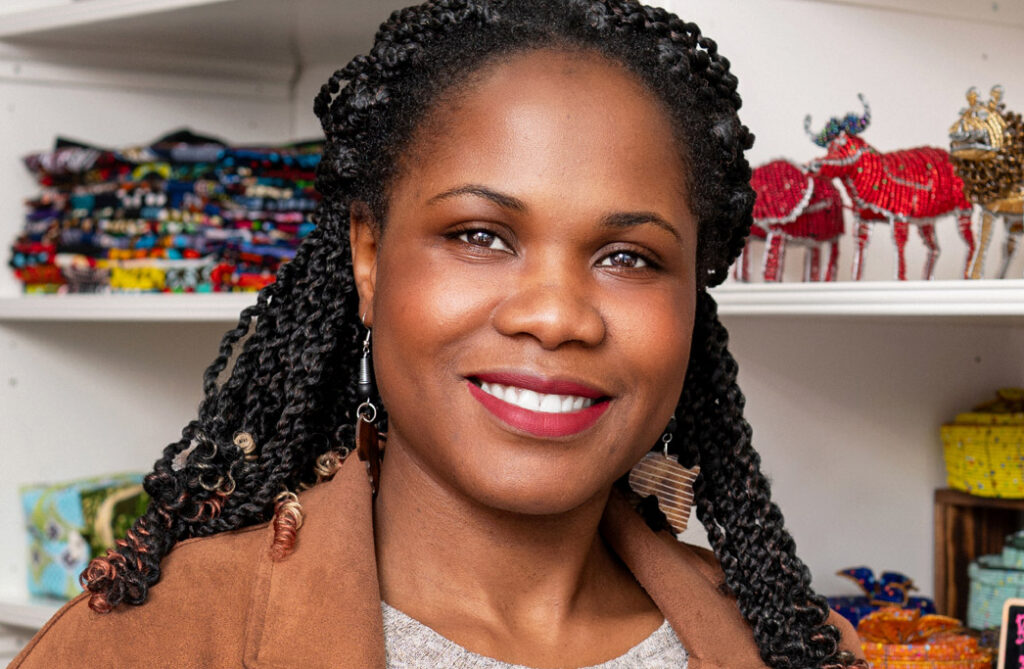
Eunice is from Uganda. She tells us she came to Mid-Ulster for love after meeting her Irish husband in Uganda. She and her family have lived here for 9 years. She grew up in a small rural region and had a very happy childhood.
Summary
She and her siblings made their own fun and she recalls playing in the forests as well as foraging for firewood and carrying water from the water hole to where she lived with her family. Until she was about 13 years old, she lived here. Her father had 3 wives; polygamy is very common and legal in Ugandan culture and tribal tradition. However, after Eunice’s mum became a Christian, she made a very courageous decision to leave her tribe as she felt this arrangement conflicted with her new biblical beliefs on marriage. Leaving a traditional tribe in Uganda to avoid becoming one of multiple wives is a deeply challenging but increasingly common decision. Many Ugandan women choose to walk away from these traditions in pursuit of monogamy, formal education, and financial independence.
Eunice’s mum and her 5 children moved to Kampala, the capital of Uganda. This was a big step for the family, so very different from her more traditional early years in the countryside. Eunice explains how as the eldest of five children, she helped her mum a lot and took on the role of “second” mum to her siblings. She also became very aware of the difficulties faced by single mothers raising their children alone. The education system in Uganda faces many challenges for children and their families. Although public schooling is nominally free, “hidden” costs like uniforms, exam fees, and building funds still price marginalized children out of the system. Rural students and girls are disproportionately affected.
Eunice saw this need and chose to act. Before she made the decision to come to live in Mid Ulster with her husband, she started a social enterprise supporting single mums. Traditional crafting including basket making, crocheting and dress making are skills taught to girls who have had the opportunity to attend school. Eunice decided to teach the local young women these skills and set up shops in Kampala City to sell the items they had made, mainly to tourists, and the profits were used to invest in education for the children. This is something that remains close to Eunice’s heart and she recently opened her own craft shop in Cookstown where she not only sells her own designs but she imports baskets made by the single mums in Uganda and sells these. Her love for creating and traditional crafting has opened many opportunities for her and her desire to help others build and establish themselves in through their cottage crafts is quite extraordinary. Her crafts have won many awards for excellence.
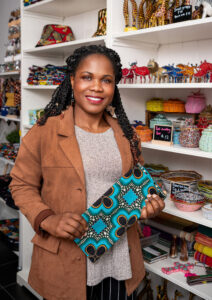 Eunice keeps her African traditions and culture alive through her crafts, fabrics, food and deeply connected family values and beliefs. It is important for her to balance her Ugandan roots with life in NI and vital that her children understand their cultural identity, respect and strong family connections both in NI and in Africa. Her shop is a very definite stamp of her traditional culture on the Cookstown high street and she tells us how it also is an opportunity to build community with locals and brings her a sense of belonging. She loves nothing better than sitting at her sewing machine creating beautiful clothes, soft toys and many wonderful creations out of African fabrics and prints.
Although she tells us she has been very warmly welcomed in her new community and has made Mid Ulster home, she still misses her extended family and friends in Kampala. That sense of belonging without needing to explain herself and the vibrant, colourful culture, celebrations, food and everyday connection, things so often easily taken for granted. In NI she has had the opportunity to build a new life and business and she is very grateful for meeting very supportive people and becoming part of her community.
Her advice to any young women moving here is to be open to learning and exploring new opportunities, not to isolate themselves but to make every effort to adjust and fit into their new community, make friends and not to be afraid to ask for support. She also emphasizes the importance of staying connected to your identity and culture and believing in yourself as you start over.
Related Themes


Education
Education acts as a primary tool for social integration, economic mobility and stability

Family
Family is the primary source of emotional support, financial stability and cultural continuity


Traditional Crafts
Traditional crafting is perhaps the most tangible manifestation of intangible cultural heritage.
