Maria Gaio
Intro
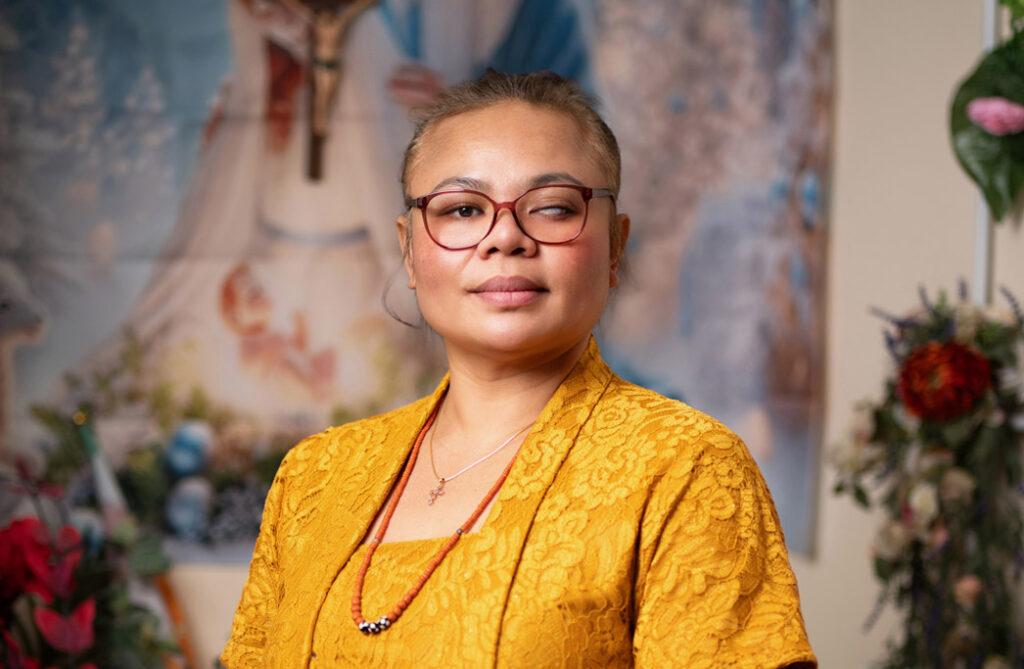
Maria is from East Timor, she has been in Mid-Ulster 15 years. Her husband came a few years before her, seeking work in Northern Ireland as the opportunities to work and to earn enough money to support a family were limited in their home country.
Summary
Of course, it was a very difficult decision to leave East Timor to make a new life in a completely new country. Difficult to leave family she was so close to and the place she had always called home but she had two young children and wanted to be reunited with her husband as a family, so finally she made the decision to follow her heart and her husband and come to Dungannon.
Although Maria grow up during the conflict when Indonesia occupied East Timor Maria had a very happy childhood. Her strong family roots and community are a legacy she carries until this day. She and her family lived in a village called Baucau, her father was a teacher and her mother worked at home and was a very gifted artisan crocheting and crafting. Her childhood holds many precious memories; going to school and working on the land afterwards were part of her daily routine. But this wasn’t a chore, it was something she loved, times when the family worked hard growing corn and rice, harvesting and cooking the crops from the land. This felt like such a reward for their hard work. These were special days as families worked and played together. It wasn’t all hard work, they played volley ball, football and other sports together and celebrated special events such as Saint Don Bosco Day – a little like Saint Patrick’s Day in Ireland.
Maria holds these times close to her heart and does her best to foster a similar sense of this community spirit and hospitality in her new life in NI. She loves to cook traditional food and is very involved in both East Timor and local communities. One of her favourite dishes is Tukir- traditionally lamb or goat meat, seasoned with plenty of spices and stuffed into bamboo shoots.
She has such an open heart and wants to ensure her community remains safe and welcoming to others. As mentioned previously life wasn’t easy as a child. She lost sight of one eye as a little girl due to chicken pox as sadly during the conflict there wasn’t sufficient medical care to save her sight. She is forever the optimist though and speaks about how her strong Catholic faith as sustained her in difficult times and how the tough times have in fact made her stronger.
Her best advice – “if we are looking for perfect, there will be no story. Our tears, our sadness, are part of our unique story, our life. These are what shape and make us.” Maria is a very strong resilient woman and wants to offer hope and acceptance to everyone she meets.
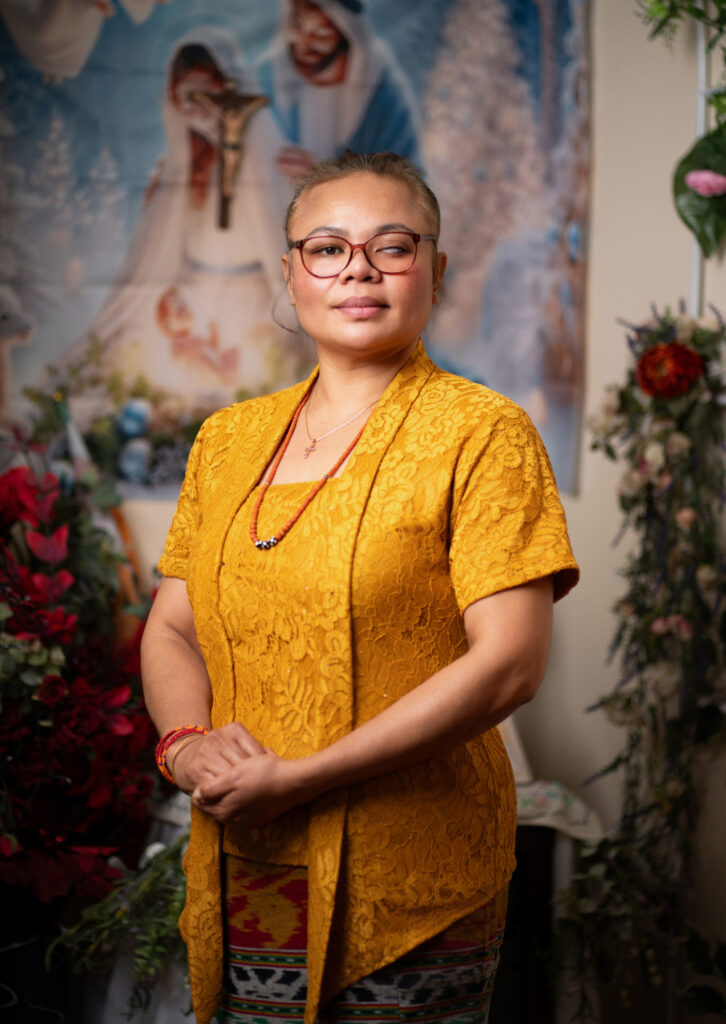 Coming to NI at first was really challenging, the culture, the language, the climate. Maria explains how everything takes time to get used to and patience really is a virtue! She had learned basic English at school but it is quite different having to speak English in a new country and trying to understand Irish accents. At the beginning she felt very isolated and alone but her children were still young and finding support through community and faith organisations slowly helped her make friends and grow in confidence. At FSWC, creche facilities meant her children could be looked after as she attended English classes and engaged in many other groups. Maria is still very much part of the community at FSWC and loves being involved in culture classes and reaching out to help others, especially those who are newcomers. She shares her experiences and offers a helping hand and encouragement. This is very important to her.
Maria is not only a busy mum with 4 children, a wife and working part time but also a very talented artist. Her gifting for crocheting and sewing are exceptional. She laughs as she tells how her mum often encouraged her in these skills and she wasn’t interested, it was only when she came to NI she decided to take up these crafts. She now excels at her crafts and her creations are exquisite. On reflection, perhaps this is a part of her heritage she is keen to help her stay connected to her family in East Timor and allows her to share a tradition from her country. She feels proud of her country.
She loves living here now and has made this home. Without doubt she misses East Timor, her family, country and everyday life and food but has adjusted to life in NI, even the climate, now she finds her home country too hot! She and her husband speak Tetum and Makasae – a dialect from their region at home. Language is important and they encourage their children to speak their languages but it is hard to hold on to this part of their heritage but for now this legacy continues.
Maria feels safe here and she loves being here because she can explore and do things she wouldn’t have had the opportunity to do in her home country. She has made friends from all over the world, learned from women of different cultures and countries and most importantly created a safe, secure home for her children to thrive, go to school and now also have the opportunity to follow their dreams. Life is good.
Related Themes

Education
Education acts as a primary tool for social integration, economic mobility and stability
Family
Family is the primary source of emotional support, financial stability and cultural continuity


Traditional Crafts
Traditional crafting is perhaps the most tangible manifestation of intangible cultural heritage.